
What Happens Right Before Closing on a Home in Colorado? (2026 Guide)
By Dana Hillig, Colorado Realtor® – Hillig Homes
At First Glance
The 7 to 14 days right before closing are the most underestimated part of buying a home in Colorado. By this point, you’ve passed inspection and appraisal, your loan is in final underwriting, and most buyers feel like they’re “almost done.” But this stretch is actually where most deals that fall apart actually fall apart. Final loan approval, the Closing Disclosure (with its mandatory 3-day waiting period), homeowner’s insurance setup, the final walkthrough, wire transfer instructions – all of it has to land cleanly in this window. With a Realtor and a lender who know what they’re doing, it’s a calm, protected week. Without that team, it’s the week most buyers wish they’d been better prepared for.
Why This Matters
Most first-time buyers in Denver focus all their energy on the first three weeks of being under contract – inspection, appraisal, negotiation. By the time those clear, they relax. That’s the mistake.
The week before closing has its own short, dense sequence of events. Each one has a specific deadline. Most are silent – meaning if you don’t know they exist, you won’t know if something is going wrong. And most of the deals I’ve seen go sideways in 2026 didn’t fall apart because of inspection or appraisal. They fell apart because:
- The buyer financed furniture before closing and the lender re-pulled credit
- A wire fraud email came in disguised as the title company’s instructions
- The buyer didn’t realize the Closing Disclosure 3-day rule existed and missed signing on time
- Homeowner’s insurance wasn’t fully in place by the lender’s deadline
- The final walkthrough turned up an issue and there was no plan for it
Each of those is preventable with calm preparation. None of them are dramatic – they’re just things first-time buyers usually don’t know about until they happen.
For first-time buyers in Denver, Littleton, Highlands Ranch, Centennial, Parker, Lone Tree, and other south Denver suburbs, this is the week where having the right Realtor matters most. The calm, methodical, “let’s slow this down and walk through it” approach pays its biggest dividend in the days right before closing.
A Real Moment I See Often
A first-time buyer couple in Parker is 3 days from closing. Loan approval is final. The Closing Disclosure has been signed. They’re already packing.
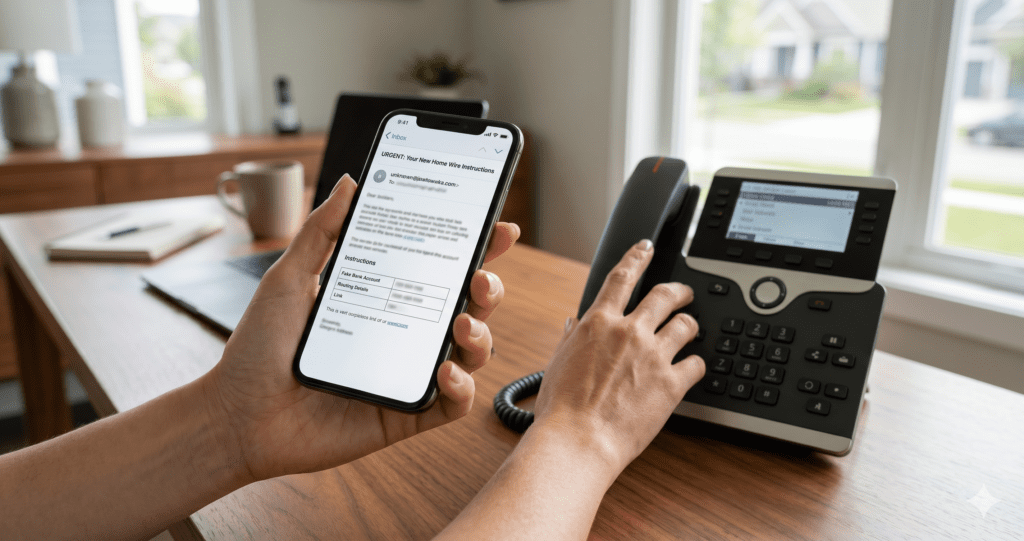
The buyer gets an email from what looks like the title company. The email has the title company logo, the right contact name, the right reference numbers. It includes wire instructions for sending closing funds – about $48,000.
The buyer almost wires the money.
But before he hits send, he calls me. Something feels off – the email tone is slightly different, the routing number doesn’t match what he was told earlier, and the email address (when he reads it carefully) is one letter off from the real one.
It’s a wire fraud attempt. A sophisticated one. The fraudsters had been monitoring email traffic and timed their fake instructions to land right when buyers expect real ones.
We call the title company on a number we already had on file (not the one in the email). They confirm: the wire instructions in the email are fraudulent. The legitimate instructions are different.
We send funds correctly. They close two days later.
But that almost-mistake would have been $48,000 gone, with very little chance of recovery. Wire fraud is one of the fastest-growing scams in real estate, and the closing window is its peak hunting ground. I tell every buyer the same thing: always verify wire instructions by phone, with the title company but a different office (because they all use the same instructions), before sending a single dollar.
What Can Help
The Sequence – What Actually Happens in the Week or Two Before Closing
In rough order, here’s what happens between the loan approval deadline and closing day:
1. Final loan approval (“clear to close”). The lender’s underwriter signs off on your loan. This is the moment you can stop worrying about whether the loan will go through. It typically lands 5–10 days before closing.
2. The Closing Disclosure (CD) is delivered. By federal law (TRID rule), your lender must deliver your Closing Disclosure at least 3 business days before closing. This is the document that shows your final loan terms, monthly payment, closing costs, and exactly how much money you’ll bring to the table. Read every line. If anything looks different from your Loan Estimate, ask immediately. And the lender should go over the with you.
3. The 3-day CD waiting period. Once you receive the CD, federal law requires a 3-business-day waiting period before you can close. If significant changes are made (rate change, loan type change), the clock can reset.
4. Homeowner’s insurance is finalized. Your lender requires proof of insurance before they’ll fund the loan. The first year is typically paid in full at closing. Set this up by week 2 of the contract – not in the final week.
5. Final walkthrough. Usually just before closing. You walk the home one last time to confirm it’s in the same condition as when you went under contract, that any agreed-upon repairs have been completed, and that the seller has moved out.
6. Closing funds wired or cashier’s check arranged. You’ll need to bring or wire the cash needed to close – down payment, closing costs, prepaid items. This is where wire fraud risk peaks.
7. Closing. You sign documents at the title company. Loan funds. Title transfers. Recording happens. The home is officially yours.
The Closing Disclosure (CD) – What to Actually Check
The CD is a 5-page document. Don’t just skim it. Specifically check:
- Loan amount, rate, and monthly payment – should match your Loan Estimate
- Cash to close – the exact dollar amount you’ll bring to closing
- Origination fees – should match what your lender quoted
- Title insurance and fees – should match the title company’s estimate
- Prepaid items – taxes, insurance, interest from closing date to month-end
- Escrow setup – what’s being held in escrow for future taxes and insurance
If anything looks different from your Loan Estimate, ask the lender to explain that day. Small discrepancies are normal and usually explainable. Large ones can indicate an error.
Wire Fraud – The Single Biggest Risk in the Closing Window
Wire fraud in real estate transactions has exploded. Sophisticated fraudsters monitor email traffic between buyers, agents, lenders, and title companies – then send fake wire instructions disguised to look exactly like the real ones, timed perfectly to land when buyers expect them.
- Always verify wire instructions by phone, using a number you already have on file (from earlier paperwork) – not the one in the email. Title companies use the same wiring instructions for the company – call another branch and ask they for their instructions – they should be the same.
- Verify in person if possible – many title companies in Denver will hand you the wire instructions at an in-person meeting
- Be suspicious of last-minute changes to wire instructions – that’s a fraud red flag
- Call the title company before AND after wiring – confirm they received the funds
- Watch for slight email-address variations – fraudsters use addresses one letter off from the real ones
A 5-minute phone call has saved many Denver buyers from $30,000–$100,000+ losses. Make the call. Every time.
What NOT to Do in the Closing Window
These all sound minor and have all cost buyers their loan approval:
- Don’t open new credit cards – even for that “no interest until 2027” furniture deal
- Don’t finance a car or large purchase – re-pulls credit, can re-trigger underwriting
- Don’t co-sign for anyone – same problem
- Don’t change jobs voluntarily – employment stability matters
- Don’t move large amounts of money between accounts – creates tracking issues for the lender
- Don’t let any payment go late – even on accounts the lender didn’t directly check
The lender re-pulls credit and verifies employment right before closing on most loans. Anything that changed since pre-approval gets flagged.
The Final Walkthrough – What to Look For
Usually just before closing. Walk the home and check:
- Condition matches what you went under contract on – no new damage, no missing fixtures
- Agreed-upon repairs are completed (if you negotiated any during inspection)
- Seller has removed personal belongings
- All systems still work – turn on faucets, flip switches, run the AC, open the garage
- Yard and exterior – same as when you toured
If something is wrong, don’t sign. Talk to your Realtor – there are options (delay closing, escrow funds for repair, credit at closing) before any documents are final.
What to Bring to Closing
For an in-person closing in Colorado, bring:
- Government-issued photo ID (driver’s license or passport)
- Cashier’s check for closing funds (if not wiring) – title company will tell you exact amount
- Wire confirmation receipt (if you wired the funds – print it out)
- Any final documents the lender requested
Closings in Colorado typically take 45 minutes to 2 hours depending on the complexity of the loan, and whether you signed the loan paperwork remotely beforehand.
When the Home Officially Becomes Yours
In Colorado, ownership transfers at recording – when the deed is recorded with the county clerk. Recording typically happens 1–4 hours after closing, depending on the title company and the county. Once recorded, the home is officially yours. Your Realtor and the title company will confirm the moment recording is complete.
Possession (when you can actually move in) is set by the contract – usually at closing or within 24–72 hours after.
Common Things That Trip Buyers Up
- Treating the closing window as a victory lap. Most deals that fall apart late fail in this window – not earlier.
- Skipping the final walkthrough because they’re already moving in mentally.
- Wiring funds without verifying instructions by phone. The single biggest financial risk in any home purchase.
- Reading the CD too late. It’s delivered 3 business days before closing for a reason. Read it the day you receive it.
- Making credit moves “because we already have the loan approved.” Final approval is conditional on nothing changing.
- Forgetting to set up homeowner’s insurance until the last week. Lenders need proof of insurance in place before funding.
- Assuming “closing day” = “moving day.” Possession is set by contract; sometimes there’s a gap.
FAQ
What does “clear to close” mean?
“Clear to close” means your lender’s underwriter has approved the final loan and you’re cleared to schedule closing. It’s the moment you can stop worrying about whether the loan will go through. It usually arrives 5–10 days before closing.
What is the Closing Disclosure (CD)?
The Closing Disclosure is a 5-page document the lender must deliver to you at least 3 business days before closing. It shows your final loan terms, monthly payment, closing costs, and exactly how much cash you’ll bring. Federal law requires the 3-day waiting period so you have time to review.
How do I avoid wire fraud at closing?
Always verify wire instructions by phone, using a number you already have on file from earlier paperwork – not the number in the email with the wire instructions. Call before sending and after sending. Be suspicious of any last-minute changes. A 5-minute phone call has saved Denver buyers from losing tens of thousands of dollars.
What do I bring to closing?
Photo ID, your cashier’s check (or proof of wire transfer), and any final documents your lender requested. Closing typically takes 45 minutes to 2 hours.
Can my loan still fall through right before closing?
Yes – though it’s rare once you’re “clear to close.” The most common late-stage problems are credit changes (new accounts, missed payments), employment changes, or large undocumented deposits. Lenders re-pull credit and verify employment right before closing.
What if I find a problem at the final walkthrough?
Don’t sign that day. Talk to your Realtor – there are options including delaying closing, escrowing funds for repair, or negotiating a credit at closing. Once you sign and the deed records, your leverage is gone.
When does the home officially become mine?
In Colorado, ownership transfers at recording – when the deed is filed with the county clerk. This typically happens 1–4 hours after closing. Once recorded, the home is yours.
Can I move in the day of closing?
Sometimes yes, sometimes no – it depends on what’s in your contract. Possession is a separate clause from closing. Some contracts give you keys at closing; others give the seller 24–72 hours to vacate. Check your contract before scheduling movers.
What’s the difference between closing and recording?
Closing is when you sign documents and funds change hands. Recording is when the deed is officially filed with the county. Recording is what makes ownership legal. There’s usually a 1–4 hour gap between the two.
Final Thoughts
The closing window is where calm preparation pays its biggest dividend. With the right Realtor and the right lender, the week before closing feels like a checklist with clear next steps and a Realtor calling you to confirm each one is done. Without that team, it’s the week first-time buyers are most likely to get blindsided by a fraud email, a credit issue, or a missed deadline.
You’ve come this far. The last week is the one to slow down for, not speed through.
Work With Dana
If you want a Realtor who walks you through every step of the closing window – from clear-to-close through recording – and personally calls to verify wire instructions before any funds move, I would love to help. Two ways to start, both free, both no-pressure:
- Download my Denver first-time buyer guide – covers every step of the buying process, including the closing window and wire-fraud protection.
- Book a free Buyer Strategy Session – phone or video, your pace, zero pressure. We’ll talk through where you are and what comes next.
Dana Hillig – Hillig Homes · Colorado Realtor® serving Denver, Littleton, Highlands Ranch, Centennial, Parker, Lone Tree, and other south Denver suburbs. Brokered by Realty One Group Five Star.
Quick Recap
- The 7–14 days before closing are where most late-stage deals actually fall apart.
- “Clear to close” = your loan is fully approved (5–10 days before closing).
- Closing Disclosure is delivered 3 business days before closing – read every line.
- Wire fraud is the biggest financial risk – always verify instructions by phone, with a number you already have on file.
- Don’t make credit moves in this window – no new cards, no new car, no co-signing.
- Final walkthrough is just before closing – confirm condition, repairs, and that the seller has moved out.
- Bring photo ID, and cashier’s check or wire confirmation to closing.
- The home becomes officially yours at recording – usually 1–4 hours after closing.
- Possession is separate from closing – check your contract for when you actually get keys.