
What Credit Score Do You Need to Buy a Home in Denver? (2026 Guide)
By Dana Hillig, Colorado Realtor® – Hillig Homes
At First Glance
In Denver in 2026, you can buy a home with a credit score as low as 580 – sometimes lower. Most first-time buyers qualify for a mortgage with a score in the 620–700 range, depending on the loan type. But your score does much more than just qualify you. It determines your interest rate, which in turn determines your monthly payment for the next 30 years. On a $600,000 Denver-area home, the difference between a 620 score and a 760 score can mean over $250 a month – or roughly $90,000 over the life of the loan.
Why This Matters
Credit score is the single most misunderstood number in home buying.
Most first-time buyers in Denver assume they need a “great” score to qualify. That is rarely true. The bigger truth is that your score affects what kind of loan you get and what rate you pay – not just whether you qualify at all. A buyer with a 620 score and a buyer with a 760 score can both qualify for the same home in Highlands Ranch, but they will pay very different monthly payments.
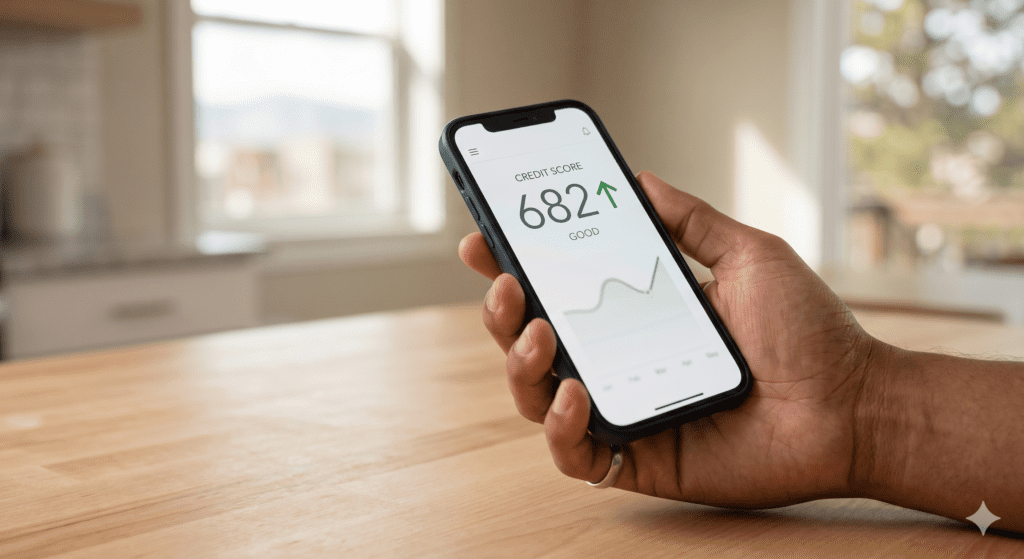
Here is the key: small improvements to your score before you apply can translate into thousands of dollars saved over the life of the loan. Even a 20-point bump from 660 to 680 can move you into a better interest rate tier with most lenders. That is why credit prep often starts months before the home search – not the week of pre-approval.
The good news for first-time buyers in Denver, Littleton, Highlands Ranch, Centennial, Parker, Lone Tree, and other south Denver suburbs in 2026: lenders are working with a wider range of credit profiles than they did during the rate-spike years. There are real loan options at 580. There are even paths at 500, with a larger down payment.
A Real Moment I See Often
A young couple calls me convinced they cannot buy a home this year. Their credit scores are around 640 – they have heard somewhere that the magic number is 700 – and they are sure they need to wait two more years.
We pull up their actual numbers. Income is solid. Debts are reasonable. We talk to a trusted local lender, and within an hour they have a conditional pre-approval at 640. The rate is not the lowest available in 2026, but it is workable. They could buy now.
But here is the more interesting part. We also look at what could move them from 640 to 680 in the next 90 days – paying down one credit card, disputing one old collection, opening no new credit. They decide to wait three months, do the work, and apply at the better tier.
The result: a meaningfully better rate. About $80 a month lower payment. Over thirty years, that small change saves them around $29,000.
The lesson is not that everyone should wait. It is that you do not need a perfect score – but sometimes a small improvement, done before you apply, pays for itself many times over.
What Can Help
Minimum Credit Scores by Loan Type
Here is what most Denver-area lenders look for in 2026:
- FHA loans: 580 minimum for 3.5% down. Below 580, some lenders work with scores as low as 500 if you put 10% down. FHA is the most flexible loan type for credit.
- Conventional loans: 620 minimum at most lenders, though many prefer 640+. The best conventional rates typically open up at 740–760+.
- VA loans: No minimum credit score from the VA itself, but most lenders require 580–620. Excellent option for eligible veterans and active-duty military.
- USDA loans: 640 typical minimum. Available in eligible rural Colorado areas (less common in Denver proper).
- Jumbo loans (above ~$750K in the Denver area): 680–700 minimum, often higher.
The “700 magic number” you may have heard about is not a qualification line – it is the threshold where the best rates start to open up.
How Credit Scores Actually Affect Your Monthly Payment
Lenders price your interest rate based on credit score tiers. Most lenders use a structure roughly like this:
- 760+ – best rate available
- 720–759 – slightly higher
- 700–719 – slightly higher again
- 680–699 – noticeably higher
- 660–679 – meaningfully higher
- 620–659 – workable, but several percentage points worse than the top tier
- Below 620 – limited to FHA, VA, or specialty programs
To put it in real Denver numbers: on a $600,000 home with FHA financing in 2026, the difference between a 620 score and a 760 score on the same loan can be roughly $250 a month – or about $90,000 over a 30-year mortgage. Same home. Same down payment. Just a different number on a credit report.
How to Check Your Credit Score for Free
You do not need to pay for a credit report. Two trustworthy free options:
- AnnualCreditReport.com – federally mandated free reports from all three major bureaus (Equifax, Experian, TransUnion). You can pull each one once a year.
- Your bank or credit card company – most major banks (Chase, Wells Fargo, Discover, Capital One, etc.) provide your FICO or VantageScore for free in your online dashboard.
⚠️ Important note on credit pulls: when you check your own credit, it is a “soft pull” that does not affect your score. Only when a lender or creditor pulls it does it count as a “hard inquiry” – and even those impact your score by only a few points temporarily.
What Lenders Actually Look For (Beyond the Number)
Your credit score is one input. Lenders also look at:
- Length of credit history – older accounts help
- Payment history – even one late payment in the last 12 months can hurt meaningfully
- Credit utilization – how much of your available credit you are using (lower is better; under 30% is a good target)
- Credit mix – having both installment loans (car, student) and revolving credit (cards) helps
- Recent inquiries – too many hard pulls in a short window looks like risk
When I introduce a buyer to a trusted local lender, the lender pulls all three bureau scores and explains which factors are pulling the buyer’s score down — and which can be improved quickly.
Quick Wins to Improve Your Credit Before Applying
If you have 30–90 days before you want to apply:
- Pay down credit cards below 30% of their limit. This is often the fastest mover on a score.
- Don’t close old accounts. Older credit history helps your score; closing the card you’ve had since college can drop your score.
- Dispute incorrect items. About 1 in 5 credit reports contains an error. The bureaus must investigate within 30 days.
- Become an authorized user on a family member’s well-managed credit card. Their long, clean history can boost your score in weeks.
- Don’t open new credit accounts until after closing.
What Hurts Your Credit During the Home Buying Process
Once you are pre-approved, here is what NOT to do until after closing:
- Don’t open new credit cards – even for that “no interest until 2027” furniture deal
- Don’t finance large purchases – a new car right before closing has cost buyers their loan approval
- Don’t co-sign for anyone
- Don’t change jobs voluntarily – employment stability matters too
- Don’t let any payment go late – even on accounts the lender did not check
Your final loan approval is conditional on your credit, income, and debts staying stable through closing. Lenders re-pull your credit right before closing on most loans.
Common Things That Trip Buyers Up
- Believing 700 is the magic number. It is the threshold where the best rates start, but plenty of first-time buyers in Denver close successfully with scores in the 620–680 range.
- Confusing FICO and VantageScore. Banks and free apps often show VantageScore. Lenders use FICO. They are usually within 10–20 points of each other but not identical.
- Closing old accounts to “clean up.” This usually hurts more than it helps. Length of credit history matters.
- Treating a pre-approval as the final word on credit. Lenders re-pull your credit right before closing. Stability between pre-approval and closing matters.
- Disputing accurate items hoping they will be removed. Disputes only help if the item is genuinely incorrect. Disputing accurate negative items can sometimes flag the file for additional review.
FAQ
What is the minimum credit score to buy a home in Denver in 2026?
The realistic floor is 580 with an FHA loan and 3.5% down. Some lenders will work with scores between 500 and 579 if you can put 10% down. For conventional loans, 620 is the typical minimum, though many lenders prefer 640+.
Will checking my own credit score hurt my credit?
No. When you pull your own credit report or score (through your bank, AnnualCreditReport.com, or apps like Credit Karma), it counts as a “soft pull” and has zero effect on your score. Only when a lender or creditor pulls it for an actual credit application is it a “hard inquiry,” and even those impact your score by only a few points temporarily.
How much does my credit score actually affect my monthly payment?
Significantly. On a $600,000 Denver-area home with FHA financing in 2026, the difference between a 620 score and a 760 score can be roughly $250 per month – or about $90,000 over a 30-year mortgage. The exact dollar impact depends on the loan type and current rates, but a higher score essentially always saves you money.
Can I qualify with student loans on my credit report?
Yes – student loans are common, and lenders are familiar with them. What matters is whether you are current on payments and how the loan payment fits within your debt-to-income ratio. Income-driven repayment plans are often factored into your DTI calculation.
How long does it take to improve my credit score?
It depends on what you are fixing. Paying down credit card balances can move your score within 30–60 days. Disputing errors typically resolves in 30–45 days. Building positive payment history takes longer – usually 6–12 months to see meaningful change. Most first-time buyers in Denver who do focused credit prep see real improvement within 90 days.
Should I pay off old collections before I apply for a mortgage?
Sometimes – but talk to a lender first. With some loan types and some recent collections, paying them off can actually reset the date on your report and hurt your score temporarily. With older collections, the smart move may be to leave them alone and let them age off (most collections fall off your report after 7 years). A trusted local lender will tell you which to pay and which to leave.
What’s the difference between FICO and VantageScore?
FICO is the score lenders use for mortgages. VantageScore is the score most free apps (Credit Karma, Credit Sesame, your bank dashboards) display. They are usually within 10–20 points of each other but built on slightly different math. When you talk to a lender about your score, ask them what your FICO is – that’s the one that matters for your loan.
Final Thoughts
Your credit score is a number, not a verdict. It can be improved, and even a small improvement before you apply often saves you tens of thousands of dollars over the life of the loan.
If your score is in the 580–680 range, you can almost certainly buy a home in Denver in 2026 – the question is just which loan type and what rate. The smartest first move is the same as where to start when buying a home in Denver: a free, no-pressure conversation with a Realtor and a trusted lender, where we look at the real numbers together.
Most first-time buyers are closer than they think.
Work With Dana
If you would like to look at your real credit picture and what it means for your home buying timeline – and which Colorado-specific loan programs your score qualifies for – I would love to help. Two ways to start, both free, both no-obligation:
- Download my complete first-time buyer’s guide – it covers credit, loan types, down payment programs, and every step of the process for first-time buyers in Denver.
- Book a free Buyer Strategy Session – phone or video, your pace, zero pressure. We will look at your numbers together, connect you with a patient local lender, and figure out what is real and what is myth.
Dana Hillig – Hillig Homes · Colorado Realtor® serving Denver, Littleton, Highlands Ranch, Centennial, Parker, Lone Tree, and other south Denver suburbs. Brokered by Realty One Group Five Star.
Quick Recap
- You can buy a home in Denver with a credit score as low as 580 (FHA, 3.5% down). Some paths exist down to 500 with 10% down.
- Most first-time buyers qualify in the 620–700 range with workable loan terms.
- The “magic 700” myth is wrong. 700+ unlocks the best rates, but plenty of first-time buyers close successfully below it.
- A small improvement before applying often saves tens of thousands of dollars over the life of the loan.
- Check your credit for free at AnnualCreditReport.com or through your bank dashboard.
- Quick wins: pay down cards below 30% utilization, don’t close old accounts, dispute genuine errors, and don’t open new credit until after closing.
- Lenders re-pull your credit right before closing – keep your financial picture stable from pre-approval through closing day.